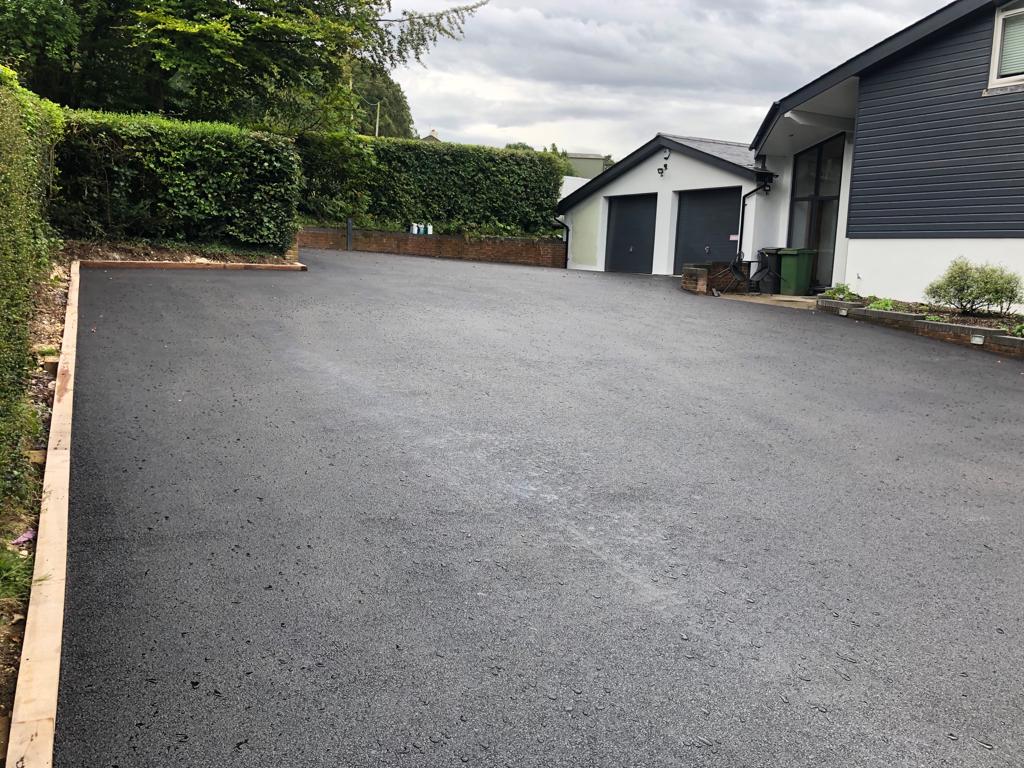
A driveway needs more than a durable surface to provide dependable everyday access. Its shape, levels and drainage all influence how comfortably vehicles can enter, travel across, turn and leave the property. When a driveway develops ruts, depressions, steep transitions or areas of standing water, everyday vehicle movements can become increasingly difficult.
Proper grading creates the correct driveway profile before asphalt, bitumen or another suitable surface treatment is applied. It can also restore the shape of an existing unsealed driveway where traffic and weather have displaced material over time. At Beaudesert Asphalt & Bitumen Surfacing, we provide professional driveway grading and surfacing services throughout Beaudesert, QLD, with careful attention to drainage, pavement preparation and long-term usability.
What Does Driveway Grading Actually Involve?
Grading is the process of shaping and levelling the pavement to establish an appropriate profile.
The objective is not necessarily to make a driveway completely flat. A driveway usually requires carefully planned falls so water can move away rather than remaining on the trafficable surface.
Depending on the condition of the site, professional grading can help:
- Correct ruts and depressions
- Remove abrupt surface irregularities
- Establish more consistent vehicle access
- Improve drainage
- Redistribute suitable pavement material
- Prepare a stable profile for surfacing
- Correct areas where water regularly collects
The finished profile needs to work with the way the driveway is used as well as the surrounding drainage conditions.
A More Consistent Surface Supports Predictable Vehicle Movement
Deep ruts, sudden dips and irregular sections can make a driveway uncomfortable and difficult to negotiate.
Drivers may begin changing their normal path to avoid the worst areas. This can concentrate traffic on pavement edges or other sections that were not intended to receive repeated loading.
Professional grading restores a more consistent trafficable profile. Vehicles can follow a predictable route without continually manoeuvring around potholes, depressions or badly deteriorated sections.
This is particularly valuable around entrances, bends and turning areas where drivers already need to control vehicle position carefully.
Grading Can Remove Problematic Ruts
Wheel ruts commonly develop where vehicles repeatedly follow the same path.
As the ruts deepen, tyres can be forced into established channels. The depressions may also begin collecting water, making deterioration progressively worse.
Professional grading can reshape suitable pavement material and restore the surface profile before the ruts become more severe.
If rutting repeatedly returns, however, the cause should be investigated. Deep or recurring ruts may indicate inadequate compaction, weak supporting materials or another problem beneath the visible surface.
Correct Levels Can Reduce Sudden Bumps and Dips
A driveway with inconsistent levels can contain abrupt transitions that affect vehicle movement.
Low areas can form through settlement, erosion or repeated traffic, while displaced material may create raised sections elsewhere. These irregularities can become particularly noticeable when vehicles enter at an angle or travel over them at low speed.
Grading allows the pavement profile to be reshaped so transitions are more consistent.
Where substantial settlement has occurred, additional pavement preparation may be required rather than simply moving surface material.
Good Grading Helps Water Leave the Driveway
Drainage is one of the most important reasons to grade a driveway correctly.
Water should be encouraged to move away from the trafficable surface instead of collecting in depressions or following wheel tracks.
Poor drainage can contribute to:
- Standing water
- Erosion
- Softened pavement materials
- Pothole formation
- Rutting
- Edge deterioration
- Progressive surface damage
By establishing appropriate falls, grading helps control how rainfall moves across and away from the driveway.
Standing Water Can Lead to Further Deterioration
A puddle may appear to be a relatively minor inconvenience, but repeated water accumulation can indicate that the driveway profile is no longer functioning effectively.
On an unsealed driveway, standing water can soften susceptible materials and make them easier for vehicle tyres to displace.
On a sealed driveway, water can exploit existing cracks, damaged edges or potholes and potentially reach the pavement layers underneath.
Correcting the low point rather than continually dealing with the resulting damage can provide a more effective approach.
Potholes Can Affect the Way Drivers Use a Driveway
Potholes do more than make a surface rough.
Drivers often brake, steer around them or move towards the edge of the driveway to avoid impact. If several potholes develop, the usable vehicle path can become increasingly irregular.
Where potholes on an unsealed driveway are connected to poor surface shape, professional grading can help restore the broader pavement profile after the affected areas have been appropriately addressed.
Deep potholes may require additional repair first. Simply dragging loose material into a substantial hole does not necessarily correct instability underneath.
Driveway Edges Need to Be Considered
The edges of a driveway are often more vulnerable than the central trafficable area.
When drivers continually move towards the edge to avoid ruts or potholes, those sections may receive increased loading. Unsupported edges can then deteriorate, deform or break away.
A well-graded driveway encourages vehicles to use the intended trafficable area rather than repeatedly avoiding damaged sections.
Professional preparation should also consider whether the pavement edges have suitable support.
Entrances Need Smooth, Practical Transitions
The driveway entrance is an important part of the overall profile.
Vehicles may be turning while entering or leaving, which means abrupt changes in level can make the transition less comfortable and place concentrated stresses on the pavement.
Professional grading can help establish a smoother transition between different sections of the driveway while maintaining the falls needed for drainage.
The entrance should be considered as part of the complete driveway rather than treated as an unrelated section.
Grading Is Important Before Asphalt Surfacing
The finished asphalt surface follows the pavement profile prepared underneath it.
If a poorly shaped base contains depressions, unsuitable levels or significant irregularities, installing asphalt over it does not automatically correct every problem.
Before asphalt is laid, grading can establish the required shape and levels. The supporting materials can then be properly compacted to provide a stable foundation for the asphalt wearing surface.
Good preparation contributes to:
- Consistent surface levels
- Effective drainage
- Stable pavement support
- Smoother vehicle access
- More dependable long-term performance
The quality of the preparation underneath the asphalt is therefore fundamental to the finished driveway.
Grading Also Supports Spray & Seal Bitumen Surfacing
Spray & Seal also depends on a properly prepared pavement.
The treatment creates a sealed wearing surface using bitumen binder and aggregate, but it is not intended to correct substantial problems with the pavement profile underneath.
Ruts, potholes, drainage issues and unstable areas should be addressed before sealing.
Professional grading can form an important part of this preparation by establishing the shape required for the completed driveway to function effectively.
Compaction Is Just as Important as Shape
Grading moves and shapes pavement material, but the restored surface also needs suitable stability.
Compaction helps consolidate the prepared materials so they can better support vehicle traffic. Without adequate compaction, freshly graded sections may move more readily once regular vehicle use resumes.
Grading and compaction therefore need to work together.
A driveway that looks smooth immediately after grading is not necessarily properly prepared if the supporting material remains loose or unstable.
When Is Grading Alone Not Enough?
Grading is highly effective for correcting many profile-related problems, but it cannot repair every form of driveway deterioration.
Additional work may be necessary where there is:
- Significant base failure
- Severe settlement
- Deep potholes
- Extensive erosion
- Unstable pavement materials
- Persistent drainage problems
- Insufficient suitable material
- Major structural deterioration
In these circumstances, simply reshaping the upper surface may temporarily improve its appearance while leaving the underlying problem unresolved.
Professional assessment can determine what preparation is required before the driveway is graded or resurfaced.
Warning Signs That Your Driveway May Need Grading
Property owners do not need to wait until a driveway becomes severely deteriorated before having its condition assessed.
Common warning signs include:
- Vehicles regularly avoiding particular sections
- Increasing wheel ruts
- Recurring potholes
- Water pooling after rainfall
- Rough or uneven areas
- Loose material accumulating in certain sections
- Noticeable depressions
- Poor transitions at entrances
- Deteriorating pavement edges
These changes can indicate that the driveway is losing the profile required for consistent vehicle access and effective drainage.
Professional Grading Focuses on the Complete Driveway
Effective driveway grading requires more than identifying the highest and lowest points.
Traffic patterns, pavement condition, drainage, foundation stability and the intended surface treatment all need consideration.
At Beaudesert Asphalt & Bitumen Surfacing, we assess driveways throughout Beaudesert, QLD before determining the appropriate grading and preparation work. This allows problems such as rutting, poor drainage and unstable sections to be addressed as part of the overall pavement rather than simply smoothing the visible surface.
Where asphalt or Spray & Seal is planned, careful grading also provides the correct foundation for the new wearing surface.
Conclusion
Proper grading can make a driveway safer and more dependable to use by creating a consistent trafficable profile, reducing problematic ruts and depressions, improving vehicle transitions and directing rainfall away from the surface. It can also help prevent drivers from continually manoeuvring around damaged areas and placing unnecessary pressure on vulnerable pavement edges.
The best results come from treating grading as part of proper pavement preparation. If deep potholes, severe settlement, weak supporting materials or significant drainage problems are present, these issues should be addressed rather than simply reshaping the surface above them.
For property owners and businesses in Beaudesert, QLD, Beaudesert Asphalt & Bitumen Surfacing provides professional driveway grading, asphalt and bitumen surfacing services tailored to individual site conditions. If your driveway has become rutted, uneven or difficult to use, our team can assess the pavement and recommend an appropriate approach for restoring reliable long-term access.
Call us on: 07 5241 1492
Click here to find out more about Beaudesert Asphalt & Bitumen Surfacing
Click here to complete our contact form and see how we can help with your Asphalt and Bitumen Surfacing needs.